
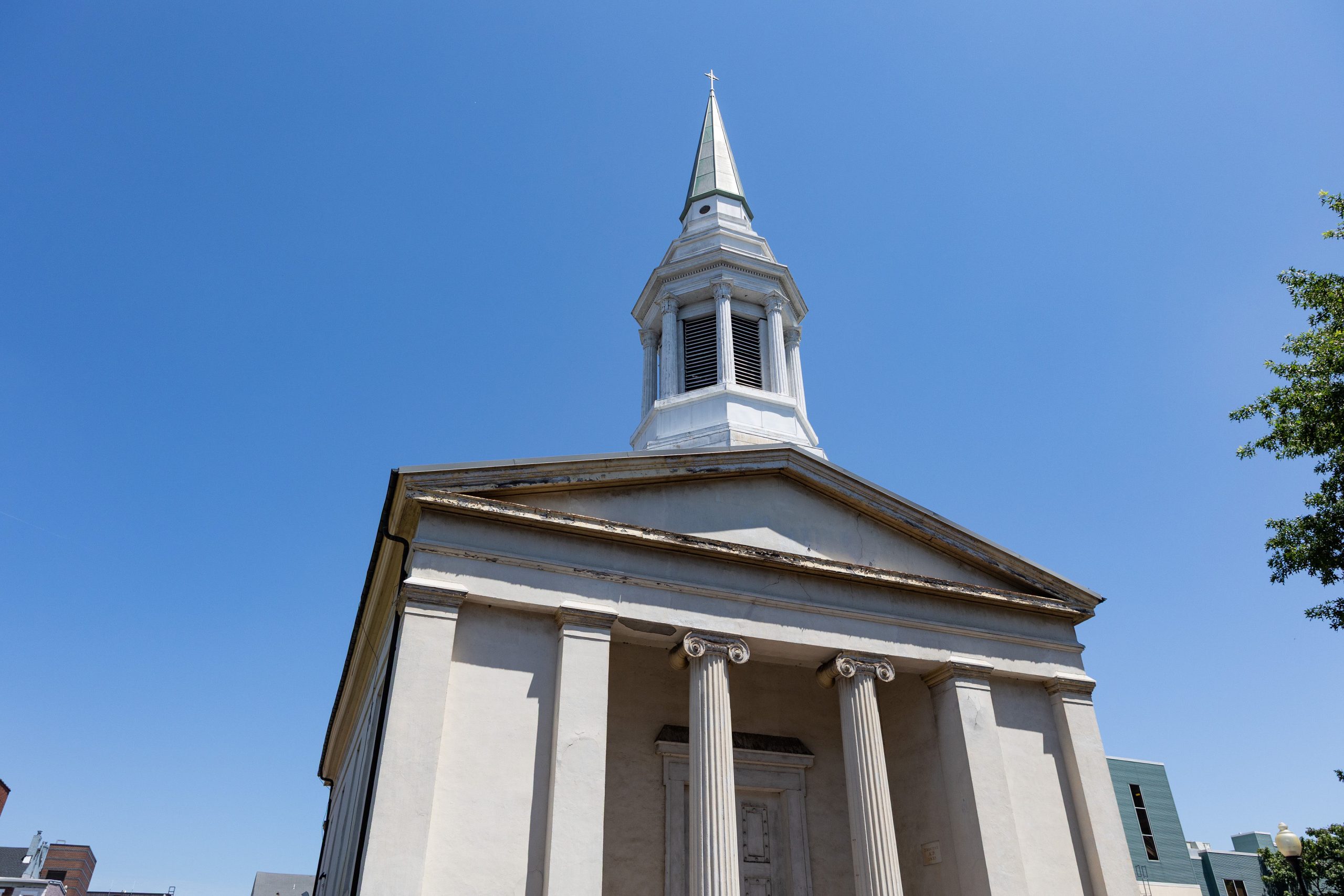
Founded in 1712, this church served as a spiritual cornerstone for Trenton’s early settlers during the colonial era. Throughout the Revolutionary War, it became a vital gathering place where patriots united to organize efforts in support of independence. Its enduring presence stands today as a powerful reminder of faith, resilience, and the birth of the United States.
Place Category: Church
-
Princeton Cemetery (at Nassau Presbyterian Church)
This historic cemetery is the final resting place of several prominent figures from the Revolutionary War, including John Witherspoon—signer of the Declaration of Independence and president of Princeton University—and Aaron Burr, a Continental Army officer who later served as Vice President of the United States. Their graves, along with those of other notable patriots, create a powerful connection to the political and military leadership of the Revolutionary era. Today, the site endures as a solemn tribute to the individuals who helped shape the nation’s founding.
-
Princeton Friends Meeting House
Meeting house tied to the Stockton family and Quaker faith. Burial site of Richard Stockton, Declaration signer. Offers historical insight into both pacifist Quaker beliefs and patriotic sacrifice.
-
Quaker Friends Meeting House of Trenton and Cemetery
This Quaker meeting house served as a neutral space during the Revolution. It was located near troop movements and activity in Trenton. Reflects the tension Quakers faced between pacifism and patriotism.
-
Quaker Meeting House (Princeton)
This simple yet significant building was a central place of worship and assembly for Quakers, who were known for their pacifist stance. Despite their neutral beliefs, Quakers were caught in the midst of the Revolutionary conflict, and the site witnessed movements of both British and American troops. It offers a unique perspective on religious tolerance and civic responsibility during wartime
-
St. Michael’s Episcopal Church
In 1776, amid internal divisions over loyalty, St. Michael’s Church suspended services. Both Continental and British forces occupied the building during the conflict. Notably, the churchyard became the site of hand-to-hand combat during the First Battle of Trenton on December 26, 1776, as American forces led by George Washington engaged Hessian troops.