
Built in 1756 to house the College of New Jersey (now Princeton University), Nassau Hall played a pivotal role in the American Revolution. When Princeton’s campus became a battlefield, the building suffered heavy damage as it was occupied at different times by both British and American troops. The Battle of Princeton on January 3, 1777, marked a turning point in the war, ending with British forces surrendering Nassau Hall to General George Washington. In 1783, the building briefly served as the nation’s capital, hosting the Continental Congress from June to November—the very place where the peace treaty with Great Britain was first announced to the new United States.
Place Category: General
-

Old Barracks Museum
The Old Barracks Museum preserves the history of a building constructed in 1758 as a French and Indian War military barracks, used as winter quarters for British soldiers. Throughout the Revolutionary War, the Barracks was used for a variety of purposes by both the British and the Americans. British prisoners of war were held in the Officers’ House, four companies of the Second New Jersey Regiment of the Continental Line were raised here, and in 1777 the Barracks became an army hospital under Dr. Bodo Otto, who oversaw smallpox inoculations for the Continental Army. It also stood witness to Washington’s crucial victory at the Battle of Trenton.
At the beginning of the 20th century, members of the Daughters of the American Revolution and the Colonial Dames organized The Old Barracks Association and spearheaded a campaign to purchase the building. The building has been a museum for over a century, and has frequently been used as a symbol for the state of New Jersey.
-
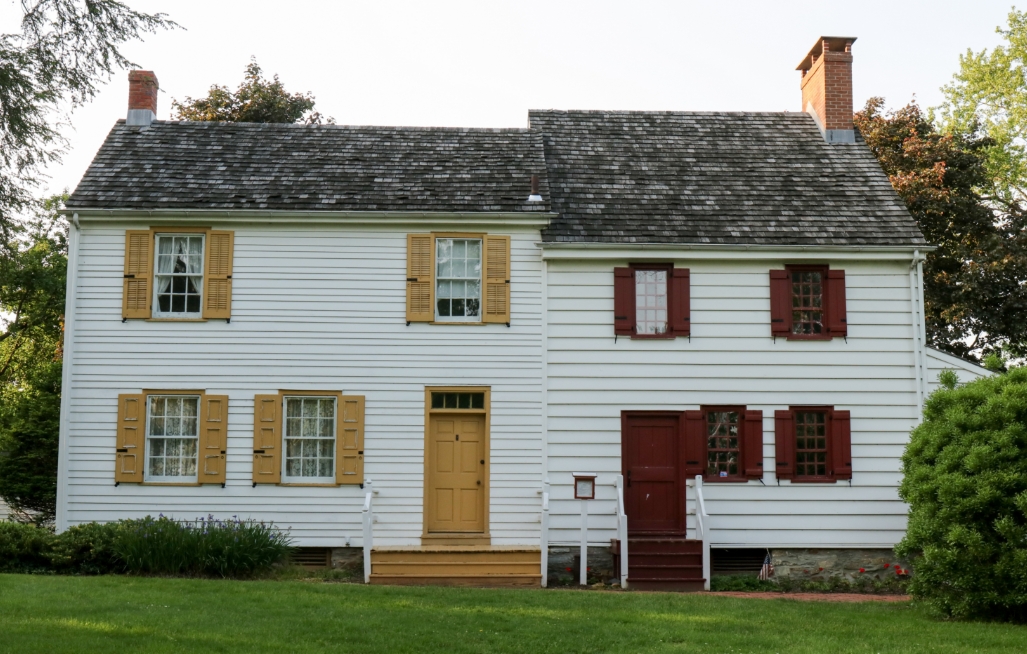
John Abbott II House Museum
House museum decorated with period furniture and artifacts. During the Revolution, the colonial treasury of New Jersey was hidden from the British in the basement of the Abbott farmhouse. The British, along with Hessian soldiers, raided the farmhouse in December of 1776 but did not find the cleverly hidden money.
-
One West State Street Building (Site of the Thirteen Stars Tavern/French Arms Tavern/City Tavern)
This was the site of the French Arms Tavern, where the Continental Congress met temporarily in 1784. Also known as the City Tavern and Thirteen Stars Tavern. It played a vital role as a political and social hub during and after the Revolution.
This location is not open for interior public access; no formal operating hours are available.
-
Princeton Battle Monument
Commemorates the Battle of Princeton on January 3, 1777. The monument honors General Washington’s leadership and the Continental Army’s victory. It serves as a prominent landmark in downtown Princeton.
Accessible during regular park hours; no formal interior hours.
-
Princeton Battlefield State Park
This park preserves the location of the Battle of Princeton, where George Washington led a surprise counterattack on January 3, 1777. The victory helped restore American morale after setbacks in New York and demonstrated the resilience of the Continental Army. The site includes interpretive trails, commemorative monuments, and reenactments that vividly bring this battle to life.
-
Princeton Cemetery (at Nassau Presbyterian Church)
This historic cemetery is the final resting place of several prominent figures from the Revolutionary War, including John Witherspoon—signer of the Declaration of Independence and president of Princeton University—and Aaron Burr, a Continental Army officer who later served as Vice President of the United States. Their graves, along with those of other notable patriots, create a powerful connection to the political and military leadership of the Revolutionary era. Today, the site endures as a solemn tribute to the individuals who helped shape the nation’s founding.
-
Princeton Friends Meeting House
Meeting house tied to the Stockton family and Quaker faith. Burial site of Richard Stockton, Declaration signer. Offers historical insight into both pacifist Quaker beliefs and patriotic sacrifice.
-
Quaker Friends Meeting House of Trenton and Cemetery
This Quaker meeting house served as a neutral space during the Revolution. It was located near troop movements and activity in Trenton. Reflects the tension Quakers faced between pacifism and patriotism.
-
Quaker Meeting House (Princeton)
This simple yet significant building was a central place of worship and assembly for Quakers, who were known for their pacifist stance. Despite their neutral beliefs, Quakers were caught in the midst of the Revolutionary conflict, and the site witnessed movements of both British and American troops. It offers a unique perspective on religious tolerance and civic responsibility during wartime
-
Rockingham Historic Site
Rockingham served as General George Washington’s final wartime headquarters in 1783. It was here that he wrote his “Farewell Orders to the Armies of the United States,” marking the end of the Revolutionary War. Today, the site is carefully preserved and offers guided tours that highlight its pivotal role in the conclusion of America’s fight for independence.
-
Second Battle of Trenton Site (Battle of the Assunpink Creek)
Washington’s troops defended the bridge at Assunpink Creek, halting British advances. This led directly to the counterattack at Princeton. The battle reinforced morale and Washington’s tactical brilliance.